KubeCon NA 2026: That's A Wrap
In this quick article, you'll learn all about my experience this week at KubeCon, along with the key points that stood out and where the industry is heading.
The Theme
- Production-grade AI infrastructure/agentic infrastructure
- Sandboxing/isolation
- Inference
With the three above, the shift from last year to this year was so exciting to see. It went from "AI is experimental in my organization" to "it's time to run this in production". That's why so many of the keynotes and talks as a whole were around the best practices for running Agents in prod and the components that go along with it (where it's running, what tools are being used, etc.).
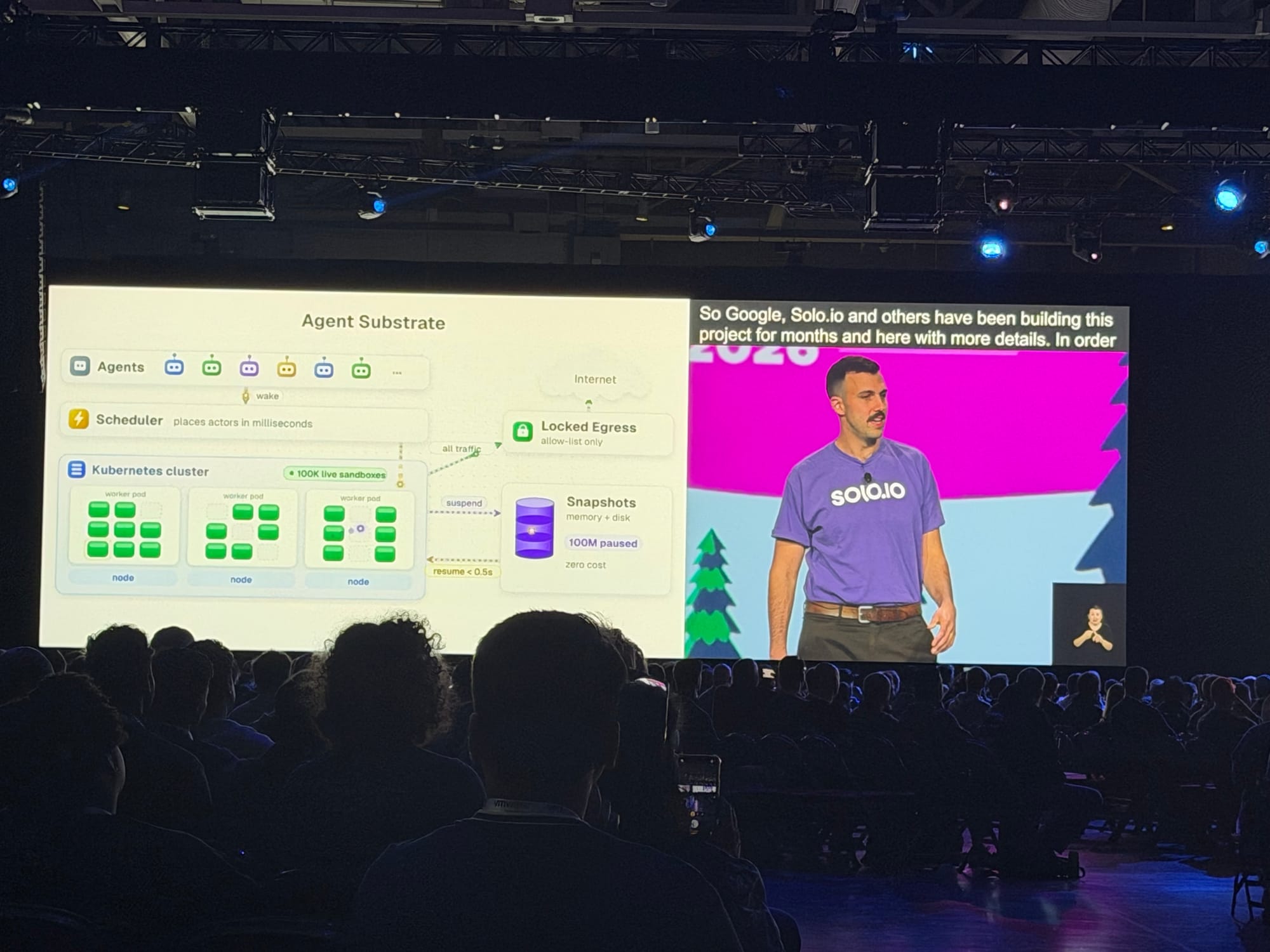
Sandboxing and isolation very-much stood out as a key implementation detail, which I was, of course, excited about as I've been putting a big chunk of my time into agentic infrastructure engines like Agent Substrate.
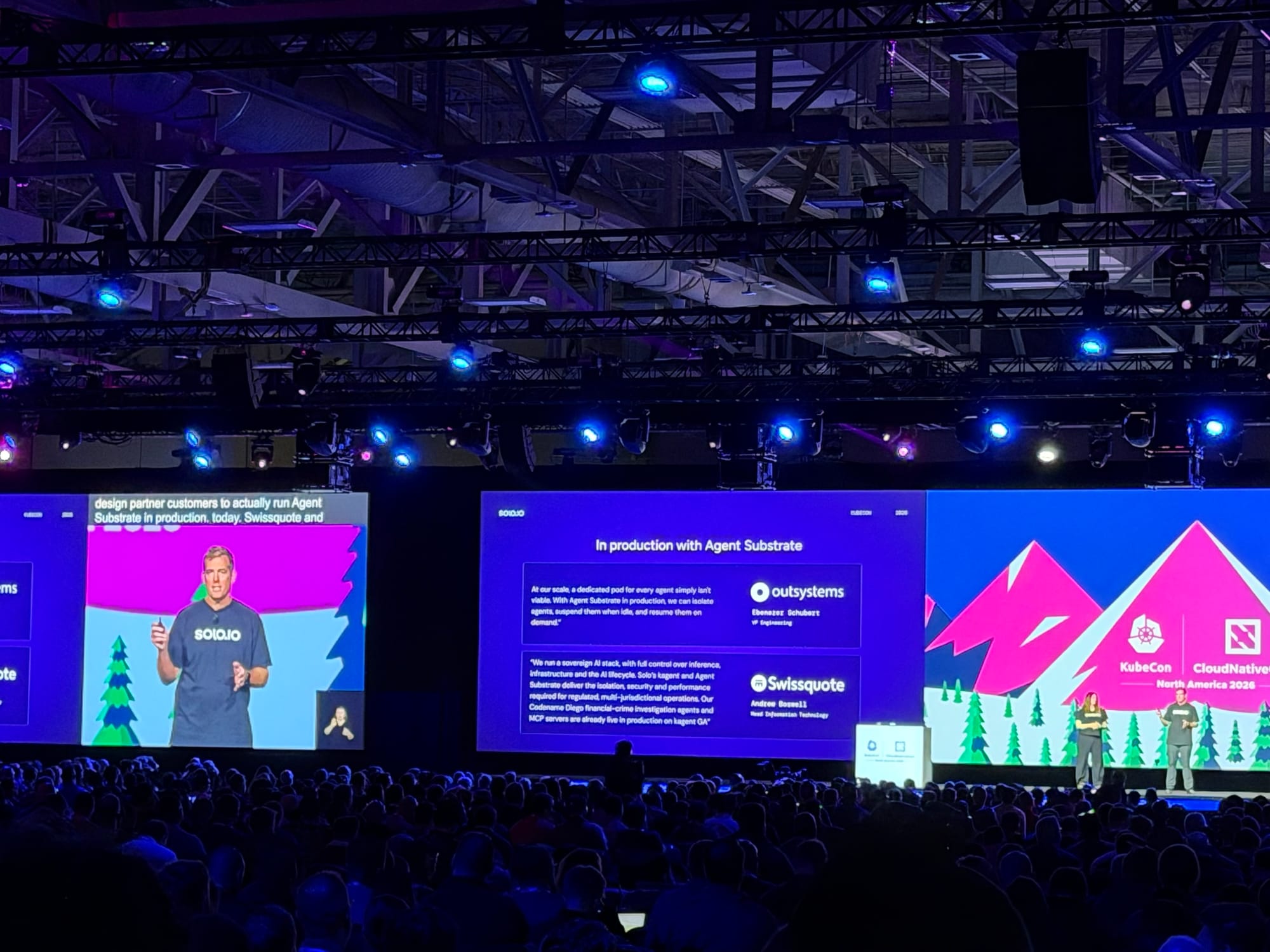
Here are a few pictures from the keynotes.
The conversations around inference and where AI is going to run were quite exciting as well because, like I've been saying for the past year or so, "hardware is cool again". When I started my career, I was on the infrastructure engineering/sysadmin side, and I remember how much I loved hardware. Getting into building PCs to play video games when I was younger was how I got into tech. I always loved the hardware aspect of things.
When the cloud came around, people were thinking about hardware as much because that layer was abstracted away. It's really cool to see conversations around hardware resources, performance, and how/where it's all going to run again.
Kicked Off With Agent Substrate Day
At all KubeCons, the Monday before the full conference starts on Tuesday is when all of the co-located events happen. One of the most popular events was Agent Substrate Day.
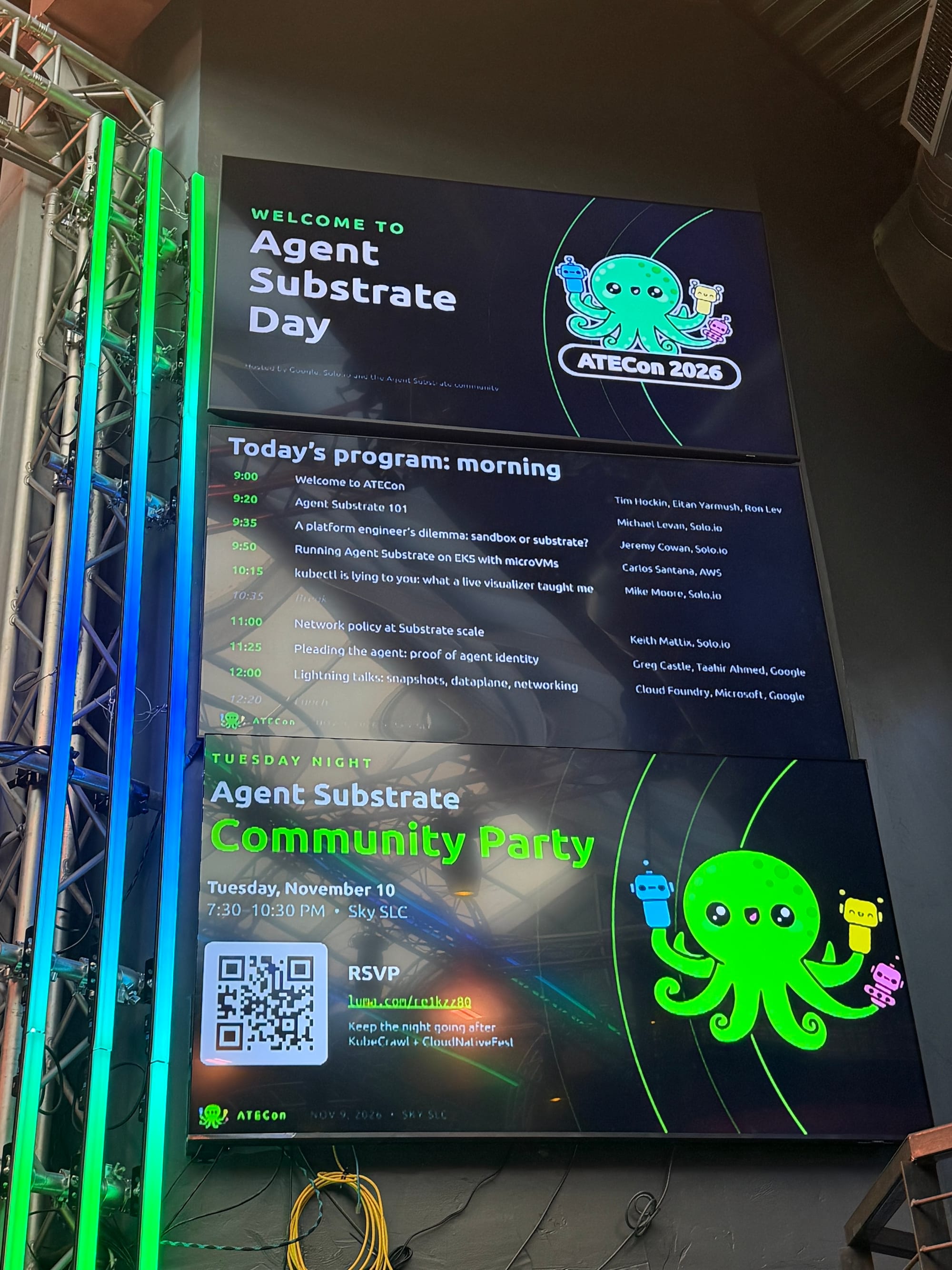
It was awesome to hear from people who said "We left to check out other co-located events, but they weren't as good as Agent Substrate Day, so we came back". One big thing I heard about Agent Substrate Day that set it apart was that it wasn't vendor pitches at all. It was a bunch of engineers in a room talking about cool stuff that they've built with Substrate. The beautiful thing about that is it very-much gave "early days k8s vibes".
I was lucky enough to give the first talk of the day to dive into all of the Agent Substrate components, why they're important, how they work, and why people thinking about agentic infrastructure need to adopt Substrate.
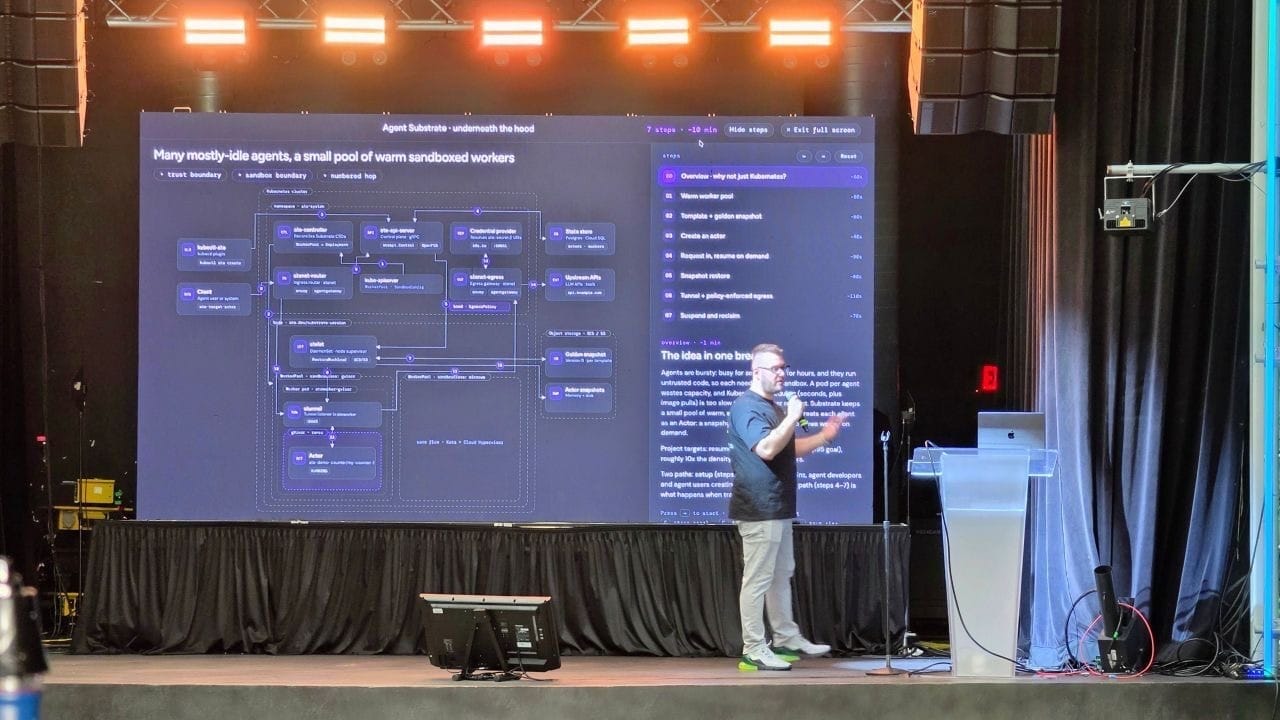
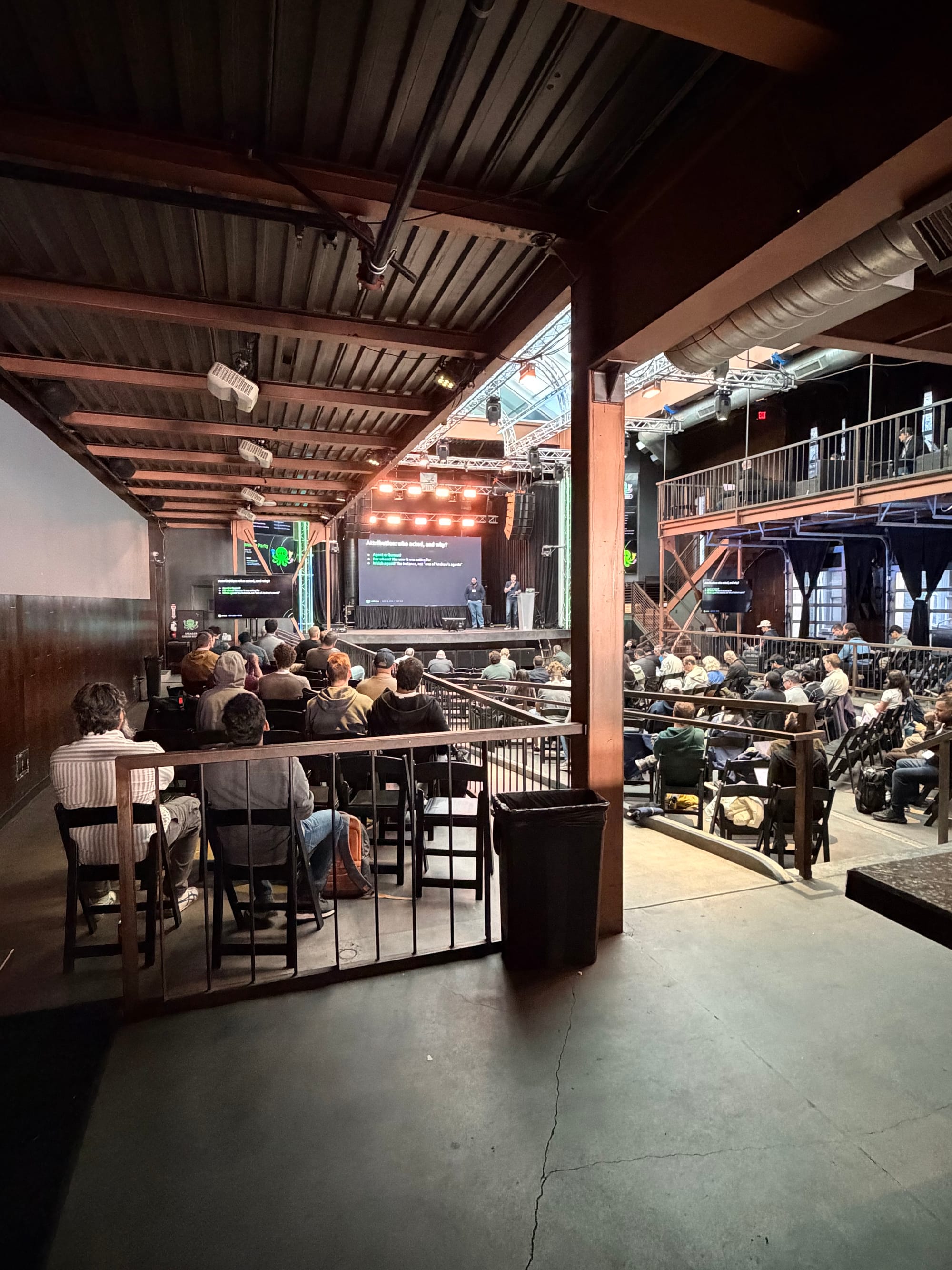
The mantra around Agent Substrate has been about sandboxing and isolation, but that's one part of it. The other huge aspect is scale. The fact that Substrate's API server is built for Agents that are in a constant state of being used and then spin down after the usage, hundreds/thousands of Agents on one Pod, and the efficiency of running Agents on a purpose-built platform to handle hundreds and thousands of sessions at a time and scheduled appropriately is key. As people begin to deploy more and more Agents, the realization of "I use it 20% of the time, so why does it need to be on 100% of the time" will be a decision maker.
The Overall Substrate Excitement
If you've ever been to KubeCon, you know that A LOT is going on. That's why it's so hard for the "after parties", co-located days, events, etc. to be successful. A ton of organizations spend a lot of money and aren't all that happy with the outcome.
Well, the Agent Substrate party on Tuesday had over 400 people in the room.
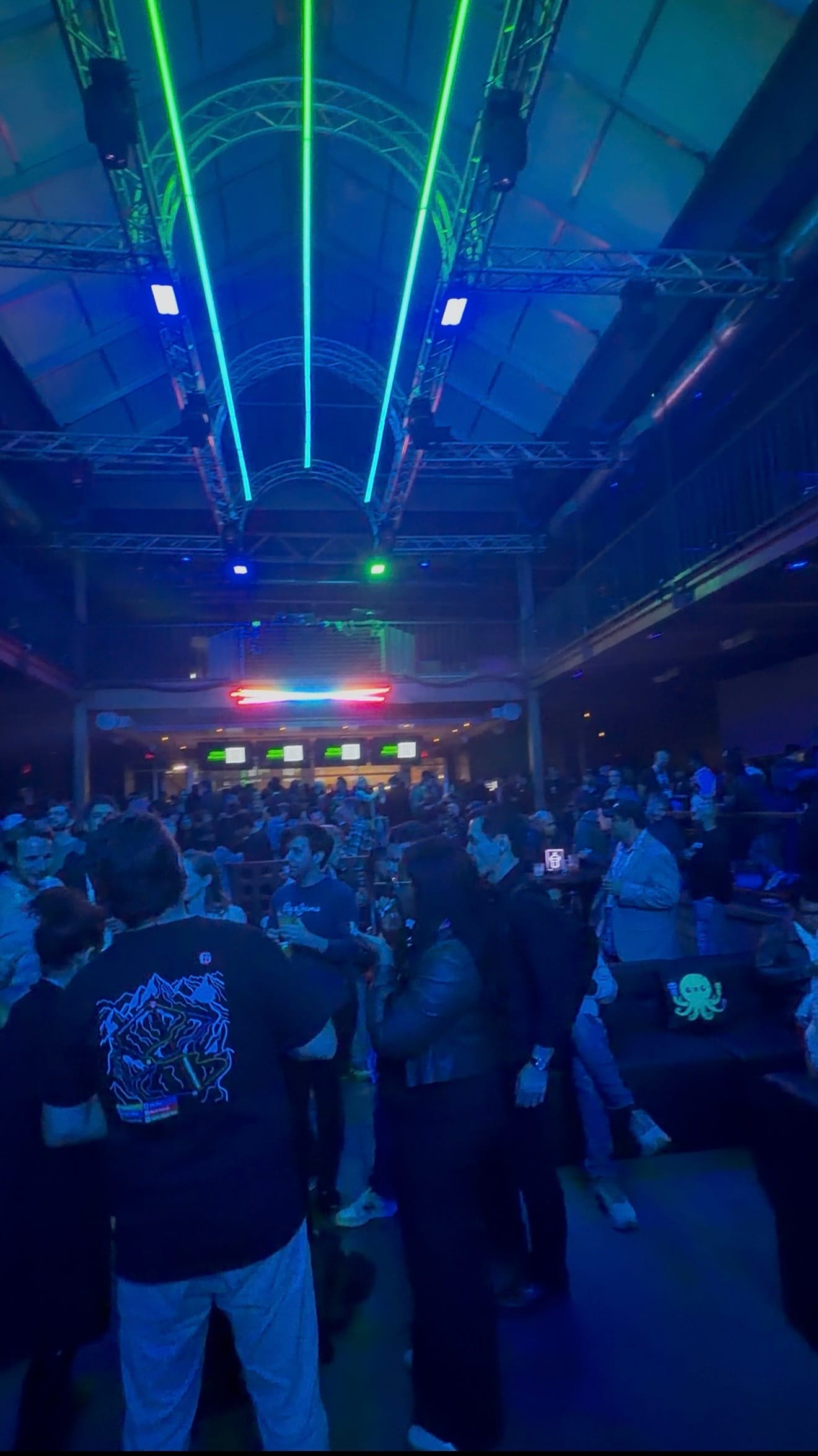
If that's not a tell for how excited people are about Agent Substrate, I don't know what is.
The Conversations
The one thing that's exceptionally tough for me on the conference showcase floor is the excessive amount of marketing and sales that no one, realistically, wants to deal with. Now, that's not to say vendors shouldn't be selling, getting leads, and making the most out of the money they spend for an event like KubeCon.
However, I think of "selling" at a conference like KubeCon in a different way.
When a vendor decides to get a booth, the people staffing the booth should be able to, and want to, have the conversations that the people who paid money to be there (the folks who registered) want to have. The folks who registered are typically engineers and technologists who want to get educated, understand how the tech works, and gain value. "Value" is the key word here, and that value doesn't come from just giving away free t-shirts (although, who doesn't like a good t-shirt?). The value comes from one thing:
- If someone left your booth after a conversation, did they leave knowing more than they knew when they arrived?
And this could be about how the industry is moving, how AI is being implemented in production, how particular products work (gateways, runtimes, underlying infrastructure, etc.), how an organization can progress with agentic stacks, and everything in between.
This is why I believe the conversations at KubeCon are so important. The goal is to provide value, and what's amazing about that is you see how the conversations change over the years. Last year, it was all about "what is AI and what do you do". This year, the questions were more geared toward implementations, running AI in production, and what's going to be needed to do it successfully. That's the key differentiating factor I saw with convos at KubeCon this year. They went from "what is this thing" to "I'm implementing this thing, now what?".
The industry is evolving when it comes to agentic infrastructure and running it in prod.
The Push Forward
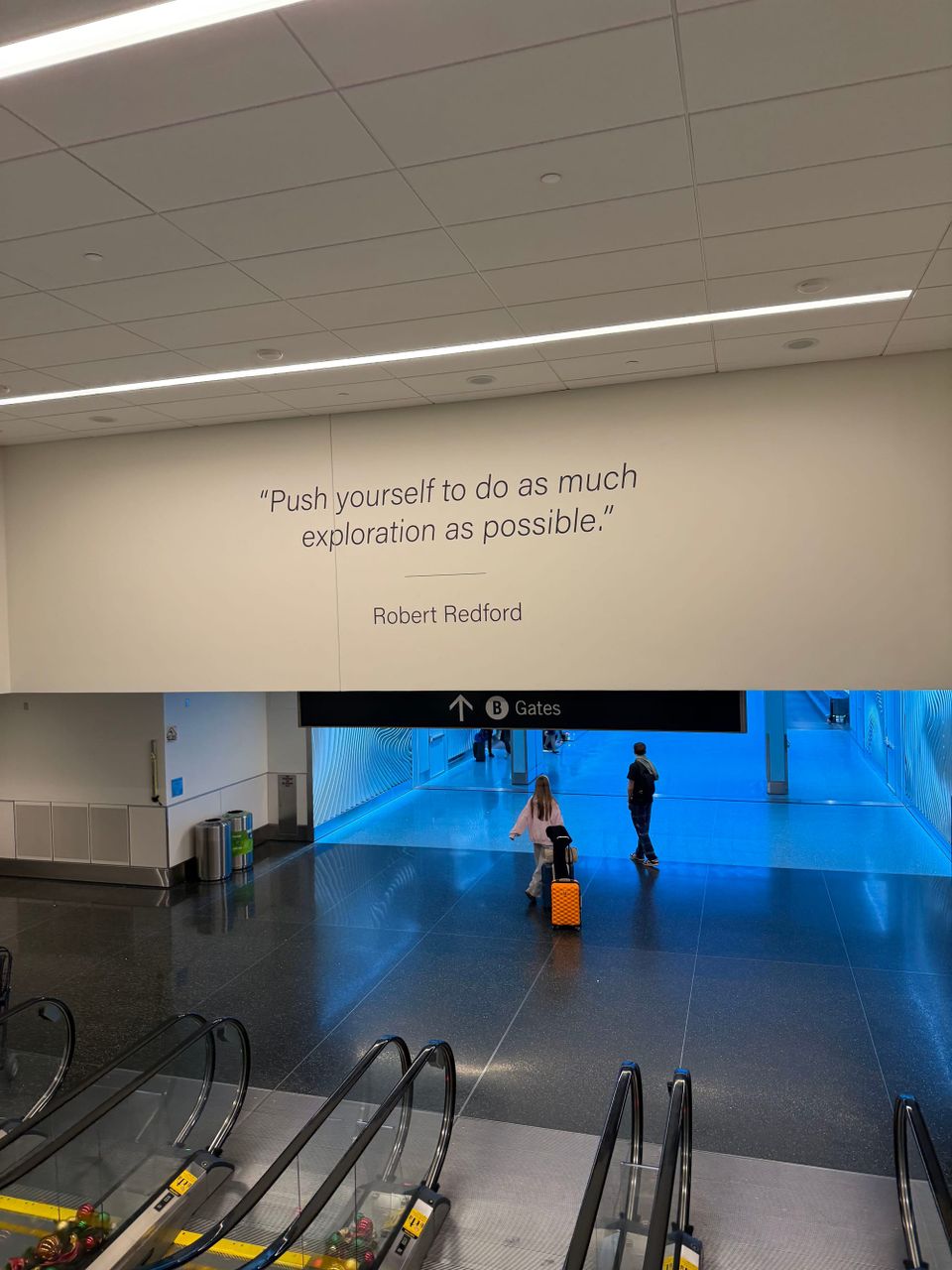
As I walked toward my terminal getting ready to board my flight after a week of diving deep, exploring new technologies, amazing conversations, and thinking through how the industry is evolving, I saw this quote.
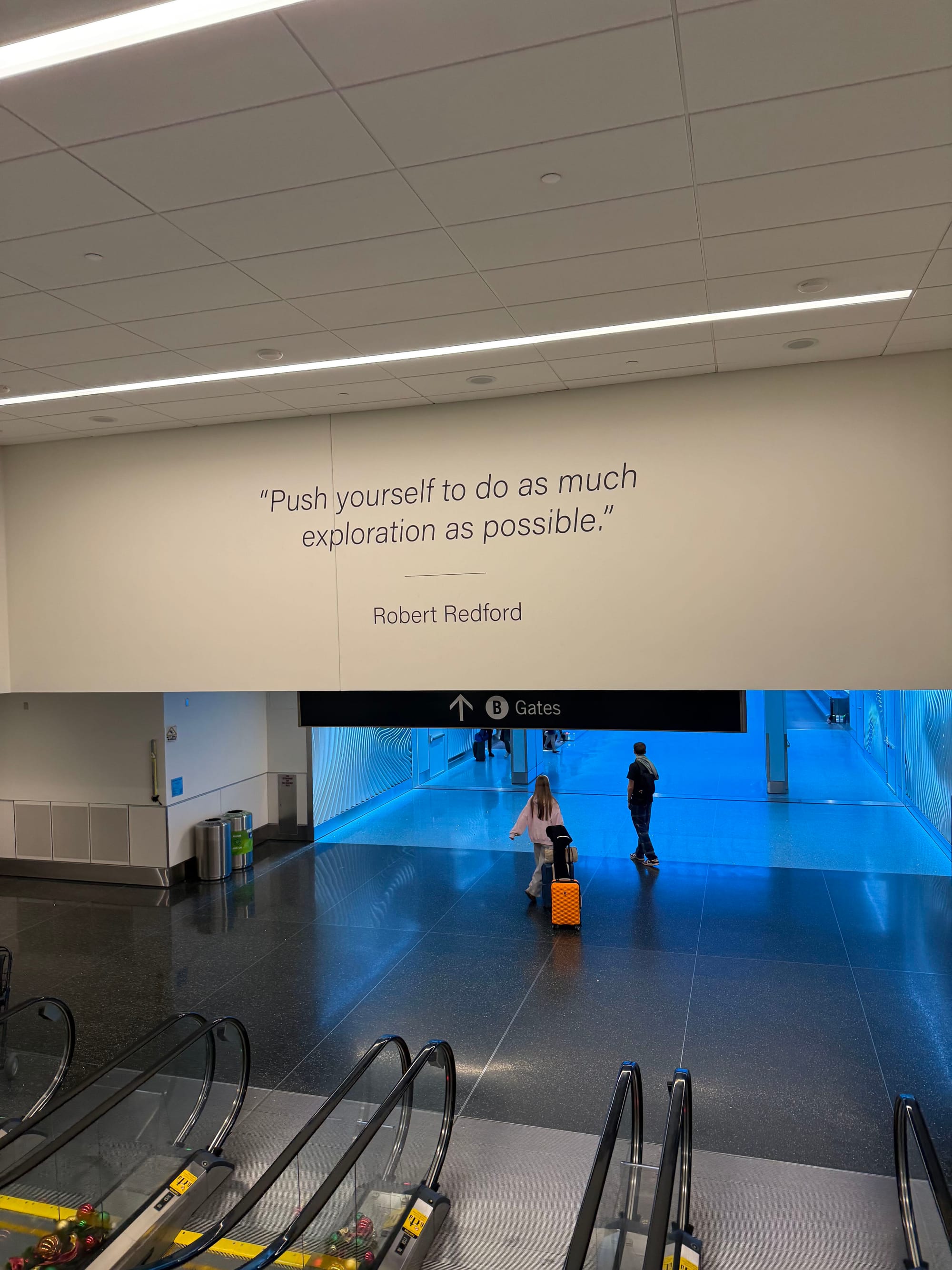
This is really what it's all about, isn't it? I mean, isn't that why we got into engineering? To explore, to understand, to grow, to tinker.
It's an absolutely beautiful time to work in tech. A lot of us, if we're lucky, and I mean really lucky, will see one more big movement like AI in our careers. The truth is that there's a high likelihood we won't.
Don't take it for granted. Stay hungry.

Comments ()